4. Quality Education
4.3.1. Public resources (Lifelong Learning)
In line with its approach to lifelong learning, IGU provides free and accessible educational resources not only to its enrolled students but also to all members of society. Through open access policies, online courses, public seminars, and library services, the university supports access to knowledge and strengthens social benefit by extending learning beyond the boundaries of the campus.
a) Open Access Policy and Institutional Academic Repository
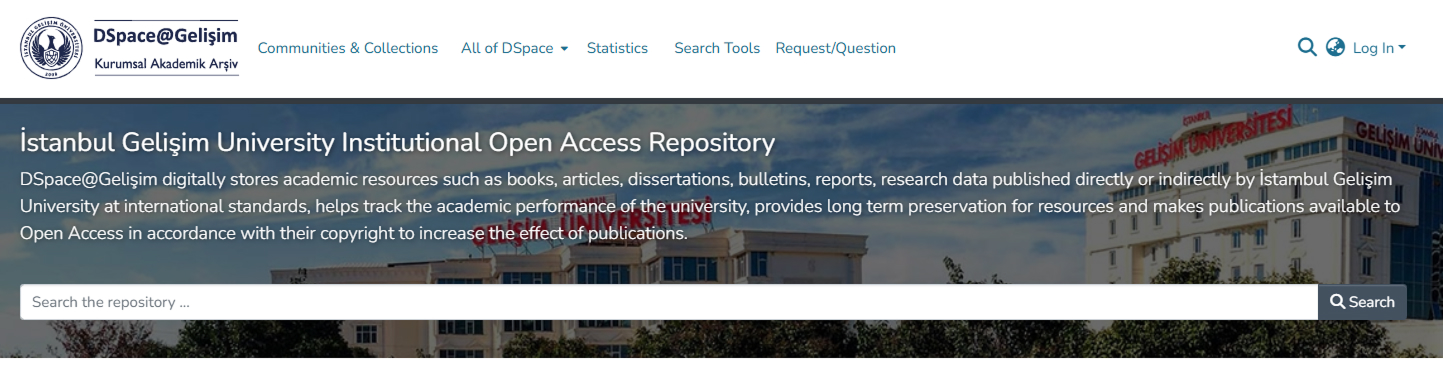
In line with the principle of inclusivity and transparency, IGU has made it a corporate objective to share all scientific publications with society. With the Open Access Policy adopted by the University Senate, all academic outputs produced by faculty members and students—such as articles, books, theses, papers, reports, and research data—are digitally stored in accordance with international standards. These outputs are made publicly available through the Institutional Open Access Repository, free of charge.
Social Contribution:
This system not only functions as a tool for monitoring academic performance and ensuring long-term preservation but also facilitates the dissemination of scientific knowledge to wider audiences. Through open access, the knowledge produced at IGU can be utilized by researchers, students, policymakers, and all segments of society, thereby supporting equal opportunities in education. Furthermore, ensuring that publications are shared in compliance with copyright regulations contributes to the ethical dissemination of academic knowledge.
b) Academic Data Management System (AVESİS)
To enhance academic transparency and access to information, IGU utilizes the Academic Data Management System (AVESİS). This system includes individual pages for all academic staff and records their scientific publications, theses, projects, research data, awards, and other academic activities. With its dynamic structure, AVESİS is continuously updated, serving both as a tool for internal performance monitoring and as a resource for external stakeholders to access information.
Social Contribution:
AVESİS is not only an internal data management tool but also a publicly accessible web platform. Available 24/7, the system provides free access to all academic outputs. In this way, researchers, students, policymakers, and various segments of society can easily access up-to-date knowledge produced at IGU. Moreover, the “Sustainable Development Goals” section within AVESİS organizes all of the university’s SDG-focused activities under dedicated headings, ensuring transparency and accessibility.
c) Open Online Courses
To strengthen equal opportunities in education and extend learning beyond the boundaries of the campus, IGU has established an Open Online Course Policy. Within the scope of this policy, online courses accessible to the entire society are designed using e-learning technologies and offered free of charge. These programs are structured to address different age groups and segments of society, covering a wide range of content for professional, academic, and personal development.
Social Contribution:
Open online courses provide opportunities for continuous and free learning to individuals who are not enrolled at the university. This practice creates equal opportunities particularly for disadvantaged groups and contributes to the sustainability of lifelong learning. Moreover, the courses support individuals in adapting to the rapidly changing labor market and social needs, while promoting access to knowledge as a democratic right.
d) IGU Continuing Education Application and Research Center (IGUSEM)
Operating within IGU, the IGUSEM organizes public training programs in line with the principle of lifelong learning. IGUSEM offers a wide range of programs that contribute to individuals’ professional, academic, and personal development; by means of certificate programs, short-term courses, seminars, and workshops, it makes learning accessible for everyone. These programs cover diverse fields such as technology, foreign languages, personal development, communication skills, health sciences, management, and the arts.
Innovative Practices:
On the IGUSEM website, two separate sections are provided to ensure transparency and facilitate access for the public:
- The “Upcoming Trainings” section allows participants to preview scheduled trainings by date, ensuring easy access.
- The “Free Trainings” section lists all fully free programs together, enabling participants to apply directly.
Social Contribution:
Many programs organized by IGUSEM are offered to society free of charge, thus reaching broad audiences. Trainings specifically designed for youth, job seekers, parents, and individuals seeking to enhance their professional skills provide direct contributions to different segments of society. This transparent structure strengthens the university’s mission of social responsibility and, in alignment with the Sustainable Development Goals, creates learning opportunities for all.
e) Public Academies
IGU reaches broad segments of society and strengthens the culture of lifelong learning through academies established in various thematic areas. These academies provide participants with knowledge and skills through seminars, workshops, and training programs in fields such as sustainability, psychosocial well-being, career planning, science and technology, finance, language, arts, and sports.
Social Contribution:
Public Academies offer educational opportunities not only to university students but also to high school students, teachers, parents, and professionals. In this way, young people’s career orientations are supported, different segments of society are equipped with skills based on sustainable development, and quality education opportunities are delivered to wider audiences.
- Sustainability Academy: Organizes seminars, short film festivals, and various events to raise awareness of environmental, social, and economic sustainability. Young people and different segments of society become more conscious of sustainable lifestyles.
- Well-Being Academy: Provides seminars and workshops on themes such as psychological resilience, motivation, anger management, and digital addiction. Participants strengthen their mental health and develop healthier social relationships.
- Career Journey Academy: Organizes activities to introduce students to different professions, help them set career goals, and develop planning skills. Young people make more informed career choices and enter the workforce as better-prepared individuals.
- Science, Technology and Innovation Academy: Offers training for high school students and young people in areas such as software, artificial intelligence, cybersecurity, and aviation technologies. By enhancing digital literacy and technological skills, it prepares young people for the professions of the future.
- Financial Literacy Academy: Provides seminars on global trade, digital marketing, economics, and finance to transfer basic financial knowledge to society. Participants develop financial awareness and make more informed economic decisions.
- Language Academy: Improves language skills through seminars and workshops focused on translation studies and English language. Participants enhance their language proficiency, making international career opportunities more accessible.
- Arts and Culture Academy: Provides seminars and workshops on art therapy, creative expression, and cultural awareness. Through the healing power of art, participants develop greater awareness and emotional resilience.
- Sports Special Talent Exam and Career Journey Academy: Offers activities for sports high schools and young people, providing preparation for physical education, sports careers, and special talent exams. This supports young people’s potential in sports and promotes a healthy lifestyle culture.
f) Research Centers
The Application and Research Centers within IGU openly share their projects, reports, and scientific activities with the public. These centers regularly publish their research addressing social issues on their websites, thereby making academic outputs accessible to everyone.
Social Contribution:
This transparency-based approach of the research centers enables scientific knowledge to be utilized not only within academic circles but also by all segments of society. Through publicly available reports and projects, policymakers, non-governmental organizations, and individuals gain access to up-to-date data, while the university’s work contributes to raising social awareness and fostering development.
g) Academic Journals and Student Publications
To ensure that scientific knowledge reaches broader audiences, IGU provides open and free access to its internationally peer-reviewed journals. Among these journals are ART/icle: Journal of Art and Design, IGU Journal of Social Sciences, IGU Journal of Health Sciences, International Journal of Engineering Technologies (IJET) and Journal of Sustainable Economics and Management Studies (ECOMAN). In addition, to foster a culture of scientific publishing among students, the TARÇIN Student Journal is regularly published, offering undergraduate students the opportunity to share their academic work with the public.
Social Contribution:
Through these publications, scientific knowledge produced by both academics and students is made freely accessible to everyone. In this way, the university supports the dissemination of knowledge to society, promotes a culture of research, and encourages young researchers. Open-access journals not only strengthen equal opportunities in education but also expand the broader impact of scientific knowledge.
h) Library and Documentation Department (KDDB)
IGU’s Library and Documentation Department (KDDB) provides services not only to university members but also to the wider community. Through its website and social media accounts, KDDB organizes public trainings, seminars, and informative content, while also offering free access to databases and public announcements.
External users are also granted access to the library’s collection during designated days and hours.
Social Contribution:
These practices ensure that access to knowledge is not limited to enrolled students and academics but is also extended to different segments of society, providing broader learning opportunities. Public seminars and free databases support information literacy, while the shared use of library resources contributes to the widespread development of a lifelong learning culture across society.
ı) Strategic Plan and Open Access Objectives
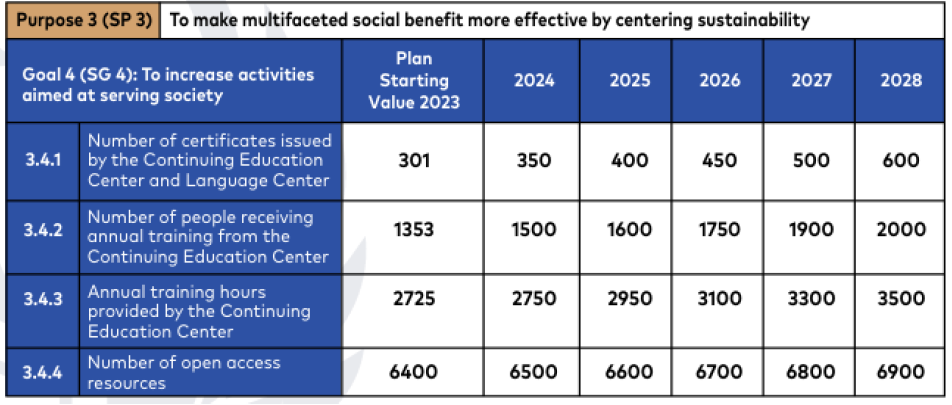
Within the scope of its 2024–2028 Strategic Plan, IGU aims to enhance knowledge sharing with society and strengthen lifelong learning activities. Under Goal 3 of the plan, “Enhancing multidimensional social benefit by placing sustainability at the center,” the number of open access resources is projected to increase each year. While the number of open access resources was 6.400 in 2023, it is targeted to reach 6.900 by 2028.
Social Contribution:
This objective demonstrates that the university has made it a corporate priority to ensure that scientific knowledge reaches not only within the institution but also all segments of society. The increase in open access resources supports equal opportunities in access to knowledge, raises social awareness, and contributes to the democratization of knowledge in line with the SDG.